

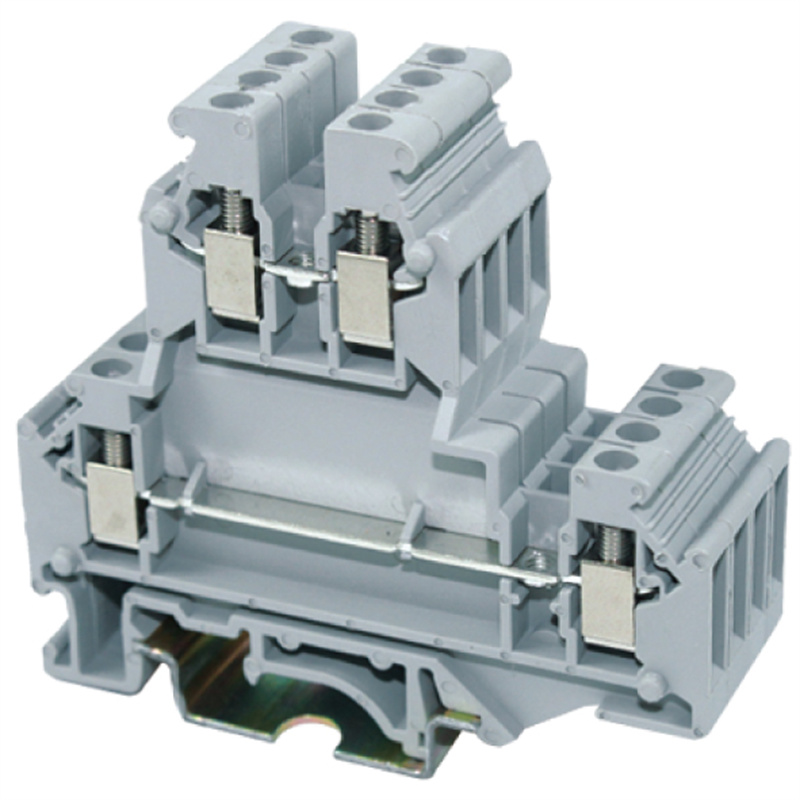
Modern industrial automation and electrical infrastructure place immense pressure on spatial efficiency and signal integrity. As control cabinets shrink and wiring complexity grows, the selection of interconnection components transitions from a minor procurement detail to a critical strategic decision. The double-layer terminal block has emerged as a primary solution for high-density wiring, effectively doubling connection capacity without expanding DIN rail footprints. Engineers and procurement officers often face a pivotal choice when evaluating these components: whether to source from established premium Western brands or to leverage the evolving technical prowess of a specialized China Double-Layer Terminal Block Contact Manufacturer. This comparison reveals that the gap in precision and reliability has narrowed significantly, while the advantages in supply chain integration and cost-efficiency have shifted toward specialized Chinese industrial clusters.
The Evolution of High-Density Wiring Solutions
Electrical wiring systems in the 21st century demand more than just basic conductivity. They require modularity, vibration resistance, and long-term thermal stability. Double-layer terminal blocks solve the “density dilemma” by stacking two independent levels of wiring in a single housing. This design presents unique technical challenges, particularly regarding the insulation integrity between levels and the mechanical durability of the contact points. Traditionally, the market perceived a sharp divide between high-cost international brands and low-cost regional manufacturers. However, the current landscape reflects a sophisticated middle ground where technical performance meets industrial scalability.
The choice between a local distributor and a direct manufacturer often hinges on the transparency of the production process. While distributors offer convenience, direct sourcing from a manufacturer with full-chain capabilities provides deeper insights into material grades and testing protocols. This transparency is vital for sectors like renewable energy and rail transit, where a single component failure can lead to significant systemic downtime.
Strategic Advantages of Integrated Manufacturing
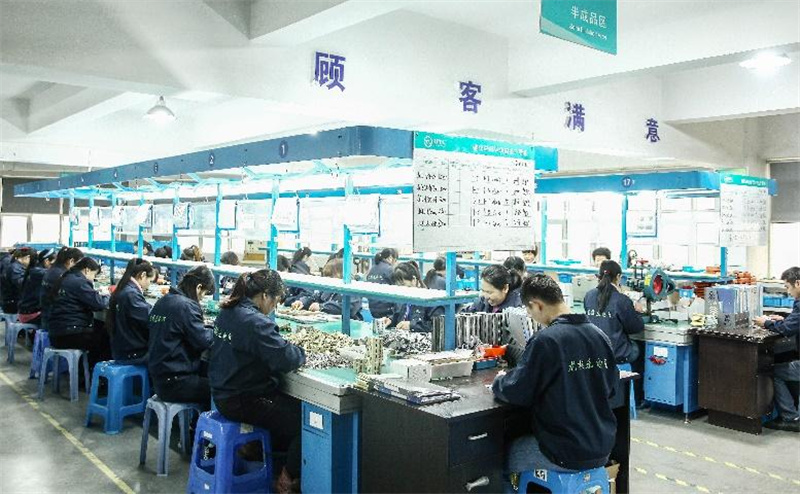
Selecting a manufacturer that controls the entire production lifecycle offers distinct benefits over fragmented assembly operations. UTL Electrical Co., Ltd. exemplifies this integrated approach. Founded in 1990 and headquartered in Liushi, known as the capital of low-voltage electrical appliances in China, the company has spent over three decades refining a “Full Industry Chain” model. This model integrates R&D design, mold manufacturing, injection molding, stamping, and production assembly.
By managing the upstream and downstream of the electrical infrastructure network, an integrated manufacturer eliminates the variability often found in outsourced components. For instance, the precision of a terminal block depends heavily on the mold’s accuracy. Controlling mold fabrication in-house allows for tighter tolerances in the plastic housing, ensuring that the internal metal busbars fit perfectly. This meticulous control results in lower contact resistance and higher mechanical pull-out strength, meeting international standards such as UL, VDE, and CE.
Performance Analysis of Double-Layer Technologies
When comparing specific solutions, the distinction between screw-clamp and spring-cage technologies remains a primary consideration. Different application environments dictate which “contact chemistry” is superior.
The JUT1-2.5/2L series represents a classic double-layer interconnection solution utilizing screw-clamp technology. These terminals provide high clamping force, which is essential for heavy-duty industrial environments. The internal contact materials prioritize high conductivity and corrosion resistance. In contrast, the JUT3-4/2 series utilizes cage-spring technology. This “vibration-proof” design is increasingly popular in high-vibration sectors like machinery manufacturing and elevators. The spring mechanism compensates for wire settling over time, maintaining a constant contact force without the need for periodic retightening.
Another notable solution is the UUK-42 series, which offers a 4mm feed-through screw terminal design. This series balances high-density requirements with the need for robust current-carrying capacity. These products highlight a key benefit of sourcing from an advanced Chinese manufacturer: the ability to access a diverse portfolio that covers both traditional and cutting-edge connection methods under one roof. The technical data for these series shows that they maintain stable performance even under fluctuating thermal loads, a testament to the quality of the nylon PA66 insulation and the copper alloy contacts.
Supply Chain Efficiency and Global Reach
Logistics and support networks often determine the long-term viability of a sourcing partnership. A manufacturer’s ability to serve international markets is typically reflected in their export volume and logistical infrastructure. Modern leaders in the connector industry, such as UTL Electric, operate as non-regional private enterprises with a heavy focus on global trade. With exports accounting for approximately 65% of total sales, these organizations align their quality control and service response times with international expectations.
The geographical layout of a manufacturer also impacts service efficiency. Utilizing a “two points and one vertical” strategy—positioning marketing centers in major hubs like Shanghai and Shenzhen while maintaining production bases in Zhejiang, Jiangsu, and Anhui—creates a resilient industrial cluster. This allows for rapid prototyping and shorter lead times. For a global buyer, this means that the distance between a design requirement and a finished product is minimized through a localized yet globally-connected network of over 100 agents.
Improving Wiring Efficiency in Practice
Real-world applications demonstrate the utility of double-layer blocks in optimizing control systems. For example, the JUT1-2.5/2Q series has been utilized in large-scale power distribution projects to reduce the physical size of the control cabinets by nearly 50%. By utilizing the double-level design, engineers can segregate signals effectively—dedicating one level to power distribution and the other to sensor feedback—without cluttering the DIN rail.
Similarly, the MU2.5H2L5.0 PCB terminal block demonstrates how double-layer efficiency extends beyond the DIN rail and onto the printed circuit board. These components allow for high-density wiring in compact electronic devices, facilitating the “digital electrical wave” that is currently transforming industrial IoT (Internet of Things). These case studies suggest that the value of a component lies not just in its unit price, but in the total installation cost and the space it saves within the final assembly.
Evaluating Quality through Global Recognition
A reliable manufacturer must prove its worth through rigorous testing and participation in the global community. Credibility is built through years of attendance at major international exhibitions, such as the Hannover Messe in Germany or Electra in the Middle East. These venues allow engineers to physically inspect the tactile quality of the products—the smoothness of the screw action, the tension of the spring, and the clarity of the markings.
Furthermore, certifications act as the primary gatekeeper for global safety. Reliable Chinese manufacturers invest heavily in obtaining and maintaining UL, VDE, RoHS, and CCS (China Classification Society) certifications. This commitment ensures that the products are suitable for diverse environments, ranging from standard industrial plants to specialized maritime applications.
Conclusion and Procurement Recommendations
Choosing a terminal block manufacturer requires a balance between technical specifications, manufacturing depth, and supply chain reliability. While many sources provide basic connectivity, a specialized China Double-Layer Terminal Block Contact Manufacturer like UTL Electric offers a unique value proposition. The combination of full-chain manufacturing, extensive international certifications, and a strategic global sales network provides a robust alternative to traditional premium brands.
For organizations looking to optimize their electrical infrastructure, the move toward integrated Chinese manufacturing represents a logical step in achieving both performance and cost-efficiency. Exploring the diverse range of screw and spring-type double-layer terminals can unlock new levels of design flexibility in automation and power distribution.
To learn more about high-density wiring solutions and international connection standards, visit the official website: https://www.utl-electric.com/.
Post time: Feb-02-2026